Showing posts with label Civil Rights. Show all posts

Wednesday, February 3, 2010

Day 191/365 Norman Norman Norman

Big thanks to Google for reminding me today is Norman Rockwell's birthday!

This calls for a quick cross-blog posting of some of my favorite paintings, as well as some more obscure Rockwell artwork.


In reference to yesterday's post on the new International Civil Rights Center & Museum in Greensboro, North Carolina, the Rockwell painting above is The Problem We All Live With,painted in 1964. It commemorated the brave desegregation of New Orleans Public Schools by little Ruby Bridges.

Notice the absolute determination in Ruby's posture, and in the arms of the U.S. Federal Marshalls in spite of the graffti and the splatters of paint.

Here's a lesser known Rockwell, painted the same year -1964- after the deaths of Michael Schwerner, James Chaney, and Andrew Goodman, the three Civil Rights workers murdered in Mississippi and left dead inside an earthen dam.

One of Rockwell's best, and most intense - Southern Justice. One young man lies dead on the ground, one is dying as he is held by the last of the three, who faces his coming murder with calm acceptance. Rocks and sticks are strewn about, but only the shadows of the murderers are shown. The only bright color is a bloody handprint.

Happy Birthday Norman - thanks for so much.

Check out Green and Chewy and While Reading to the Dog for more Norman Rockwell.

Monday, February 1, 2010

Day 190/365 Ordering Coffee and Doughnuts

International Civil Rights Center & Museum


February 1, 1960: Four young men sit down at the Woolworth's counter in Greensboro North Carolina and order coffee and doughnuts.

And began to change the world.

This was not the first "sit-in", but thanks to television and honest news reporting (versus entertainment, the youngest of you will not recognize the difference), it became the face of the segregated South.

February 1, 2010: The International Civil Rights Center & Museum opens in that very same Woolworth's, complete with the original historic lunch counter, never moved from it's original location.

In 1960, I was 6 years old in Louisiana. Everyday, whether or not I went to school was determined by the morning news. Were the schools open? Was Ruby Bridges actually going to show up and try to go to school at William Frantz? Were the police there? Was it safe? Would there be riots? For those who weren't there, Ruby Bridges was the 6-year-old child asked to integrate New Orleans schools. She was the first black child to attend an all-white elementary school in the South.

So even at the age of 6, the civil rights movement was part of everyday life for deep South children, both black and white. The adults made the laws and the decisions to overturn them. We kids, both black and white, were along for the ride.

In retrospect, I'm so proud that it was our generation that took that ride, sat in those lunch counter seats, rode the buses, marched in the streets, and reached across the artifical divide.

As soon as the weather clears, I plan on being down at that museum.

The International Civil Rights Center & Museum

203 South Elm Street

Greensboro, N.C. 27401

http://sitinmovement.org/home.asp

Tuesday, January 19, 2010

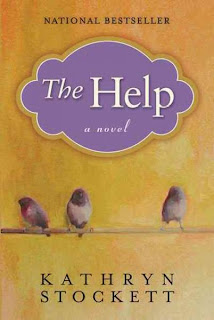
Day 188/365 Remembering The Help

I've just finished one of those books - those rare ones that are so amazing I dread turning the last page. The ones that make me (a speed reader) slow down and savor the way the author uses words as if they were tiny paint brushes meant to create a landscape in the readers mind.


Last time it was Thirteenth Tale, this time it's The Help, by Kathryn Stockett (a southerner herself born in Jackson, Mississippi and raised by a black domestic in the 1960s).


The basic premise tells the story of several women in the south, including Skeeter Phelan, just graduated from college in the early 1960s, moved back home to Jackson, no engagement ring on her finger, and no prospects. The other women include her circle of semi-friends, mostly married. That circle grows to include the black women who work for those friends when Skeeter gets an idea to collect the stories of black maids: what it's really like to work for a white woman, how bad and,in some cases, how good it is.


Having been raised in the deep South myself, this book hits a chord with me. Reading customer reviews on Amazon, I see lots of folks bogged down in how accurate the dialect was (black or southern white), or was there any way a white woman could write this book, or if a white woman had the right to tell this story, etc. Fortunately I read the book first.

I'd just like to say I didn't notice the dialect one way or the other. So I'm thinking that means it rang true. I found the most direct hit by this author- the most accurate observation - was the sense of questioning and confusion between black and white women. It was (to para-quote Dickens) "the best of times, the worst of times." Times in the early 1960s were changing at a dizzying speed, age-old customs were falling by the wayside faster than they could be acknowledged, and whatever was understood to be true in the evening would be turned upside down by morning, no matter who was involved.


And as a thank you to Ms. Stockett for this book, I'll tell you my own story. My father and his four brothers were raised by a woman named Kathleen. His mother, and her family for as far as she could remember, were all raised by black women. My father was born in 1929, and until 1980, Kathleen continued to work for my grandmother. As a child, when my family visited, from the moment we walked in the door, I answered to Kathleen. She ran the household, the meals, and the children with an iron hand.


When my grandmother passed away, Kathleen retired. My grandmother left her $5000 and her personal set of Samsonite luggage. I have no idea of Kathleen's last name. I never met her husband, or her children. I have a vague memory of my dad driving my grandmother to Kathleen's home with food when her husband passed away. We have never seen her since my grandmother's funeral. Yet, she was an integral part of the household for at least 55 years.


My dad's family was fairly well-off. My mother's family was not, being instead poor rural Virginia farmers who were very accustomed to doing for themselves. When we lived in Louisiana, we were the only family on our street that did not have "help". My mother simply couldn't see the need for it, coming from her farm background. All of my friend's families had maids. It was literally a way of life - having someone else to come in daily to clean your home, run your errands and raise your children.

To this day, I have no memory of any of my friend's parents, but I remember every maid' s face and name. My best friend next door, for all intents and purposes, rarely saw her own mother. All questions and requests for playtime were referred to the maid.

The closest we ever came to having a domestic was at nursery school at church. This was the very youngest of the Sunday School groups, and the black woman that ran it was named Doretha. I remember sitting on her lap, having gotten in trouble for something.

There were thousands upon thousands of black women working as domestics in the 1960's south. I have no doubt there are still a few in some forgotten corner of Mississippi or Lousiana. Now almost every trace of them has disappeared, except in the memories of those white children they raised, and in the memories of their own children.

Ms. Stockett's book brought all those memories back. It is an intricately crafted book for those trying to sort out how they feel about things they may have forgotten.

I've included some excerpts over at While Reading To The Dog. Nothing like the whole book though -it's one to savor. You can find a copy at Amazon -there's a link on my bookshelf.


Sunday, June 21, 2009

Day 128/365 Baseball Bats and Gasoline-Soaked Rags


June 21, 1964 - Bogue Chitto, 13 miles from Philadelphia, Mississippi.


I have such a faint memory of this event - just a memory of my dad standing in the doorway in the evening telling my mom: "They found those boys out in a dam."

I wondered "why would it matter if boys were playing at a dam? how could they be *in* a dam?"

Schwerner, Chaney and Goodman.

Poster children for the civil rights movement. Notice to white, northern, middle-class America that the civil rights movement had arrived at their front door, and it was claiming their children right along with those poor black southern children.

As a child, all the civil rights stuff was pretty removed from my existence, even living in Louisiana. The marches hadn't really arrived yet where I was, my classmates would not disappear from our newly integrated classrooms until the new school year started, and the few black people I came in contact with were people I adored (and people I had to listen to -Sunday School aides or maids that worked in my friends homes and ruled the kids with iron hands).

Being white and a child, I had the luxury of ignorance as well as not of having much at stake, no matter which way the struggle went.

Until the dam.

For some reason, finding out the boys from New York had been found right along with a black boy (and all three of them were just boys in their early twenties) from Mississippi brought it all home to me. In my little 8 year old mind I was certain someone would come at night, and I would end up buried under mounds of dirt. I had nightmares about it, dreaming of digging and not being able to breathe.

Thank god the actual details weren't released then: James Chaney was "savagely" beaten, both arms broken (one in two places),a crushed elbow, endured "pathological trauma" to his groin area, a broken jaw and a crushed right shoulder. He was shot once in the head. Both Schwerner and Goodman were were shot through the heart. The three were burned, and then buried with their car in the earthen dam.

But like I said - I was a little white child. I had nothing to worry about.


Not like the black children.


Or the Freedom Summer workers who actually came down south and joined in, all of them, black, white, Jewish, atheist, old, young.

Imagine how terrifying it was for them. Sitting there waiting for those boys to come back.

Knowing that there were people who hated them enough to actually kill them, burn them, and bury them in a dam.

"On the day of their disappearance, a Freedom Summer volunteer in Merdian, Miss., wrote a letter which concludes with the following:

"Still no word from the missing people. It must be 11 by now. No one has really said anything about the kinds of things that we're all thinking could have happened to them. The people who've been out looking just came back. Now we talk about the Klan. The FBI is trying to find some grounds to get into the case full strength. Wish they'd hurry up about it.

"Hot here, down to 95 now in the office, which is an improvement. Everyone now is very quiet, just sitting, and watching out of the darkened windows a little bit, watching the cars that circle. There's a couple of people standing around on the corner. One of them is a little kid who gets the license number of the circling cars.

"Besides that, there's nothing out there, just a kind of brightly lit street, with the electric wires crisscrossing in front of the window, and the darkness behind you when you sit in the window. Nothing to do but play ping pong or read and wait for the phone to ring. I've been reading "All Quiet on the Western Front." Somehow it's appropriate, or maybe not. We'll see . . ." *
*To order a copy of "Letters from Mississippi: Reports from Civil Rights Volunteers & Poetry 1964 Freedom Summer,visit http://www.zephrypress.org


Two historical footnotes to this tragedy:

When the FBI dive teams were looking for the three civil rights workers,they found seven other bodies of black victims -people missing, but their disappearance was either not reported or ignored.

In 2000, evidence was given that the FBI had enlisted a member of the Mob, Gregory Scarpa, Sr., to help "jog" memories of where the bodies might be found. A member of the Colombo crime family, Scarpa told his girlfriend he had forced a Mississippi Klansman to reveal the whereabouts of the victims by placing a gun in his mouth.

To all of those nameless volunteers, who sat in those hot, dark offices,not knowing whether the next car would be full of nooses, angry men with baseball bats or guns, or jars of gasline with rags stuffed in them - I have no idea where that kind of courage comes from, but I am forever grateful for yours.

And for those of you who do not remember your history: what were all these volunteers doing in Mississippi, in that hot summer of 1964?

Voter registration.

Just trying to register Americans citizens to vote.